


Cloud is no longer a nice-to-have. It is the backbone of digital transformation, national competitiveness, and the next wave of productivity in Malaysia. As the country accelerates its cloud and AI agenda, backed by national policy, hyperscaler investments, and ambitions to become an ASEAN digital hub, the key question is shifting. It is no longer which cloud, but how the cloud is built, governed, and operated.
Open architectures, open-source ecosystems (including Apache technologies), and transparent engineering practices are increasingly proving to be the strongest long-term strategy for Malaysian enterprises, government agencies, and managed service providers (MSPs). This article lays out the evidence, backed by recent industry research, and outlines practical steps for Malaysian decision-makers.
Gartner forecasts sustained double-digit growth across all cloud market segments, with hybrid cloud becoming the dominant enterprise operating model over the coming years.
As cloud adoption accelerates, organisations increasingly concentrate critical workloads within vendor-specific platforms, raising concerns around transparency, portability, and long-term dependency.
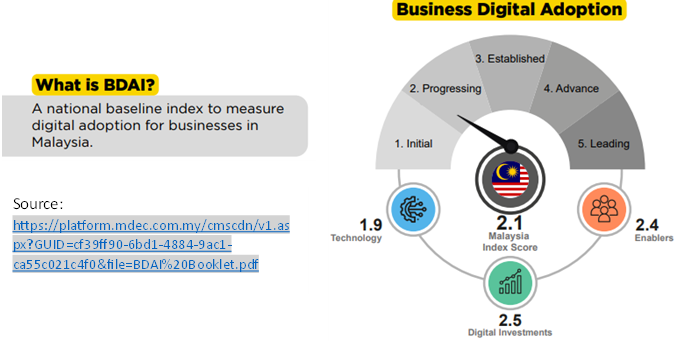
Malaysia is firmly on this trajectory. Government programs under MyDIGITAL, national cloud strategy initiatives, and a surge in hyperscaler data centre investments are driving adoption across government, finance, logistics, and manufacturing. Yet, MDEC’s Business Digital Adoption Index (BDAI) shows Malaysia is still only in a “progressing” stage of digital maturity, highlighting the need to avoid premature lock-in and embrace open, flexible models.
Malaysia’s cloud computing sector reached USD 3.7 billion by end-2024, growing at a 13% CAGR, driven by accelerated digitalisation and a 56% rise in cloud-based software usage during the post-pandemic period.
Demand for community cloud, often built on open-source stacks such as Apache, OpenStack, and Kubernetes, reflects growing interest in sovereignty and localisation. This segment is rising from USD 21.9M (2024) to USD 249.8M (2033) at 27.56% CAGR, driven by data residency requirements.
Malaysia’s broader cloud services market is projected to hit USD 15.02 billion by 2032 (14.57% CAGR), in line with MyDIGITAL goals.
According to the Linux Foundation’s 2025 open source research, a vast majority of organisations are increasing their reliance on open source, with 96% reporting increased use of open-source software in 2025 and 83% considering it essential to future operations. In the Asia-Pacific region, 49% of organisations now deploy open-source cloud technologies such as Apache-based ecosystems, Kubernetes, and Terraform.
Relying heavily on proprietary services makes switching providers costly and time-consuming. Provider-specific abstractions become barriers, locking organisations into licence escalations, pricing changes, and complex migrations.
Open standards, open-source tooling, and cloud-native architectures preserve bargaining power and simplify exits.
Open-source reduces licence fees and encourages competitive local ecosystems for support and managed services. For Malaysia, where budgets must stretch across SMEs, public sector digitalisation, and national platforms, cost transparency is essential.
Studies show that broad, competitive cloud adoption yields strong national economic benefits, especially when open-source is part of the strategy.
Open ecosystems enable Malaysian developers, universities, and vendors to inspect, extend, and contribute to the underlying stack, something impossible with closed systems.
This strengthens local capability, accelerates startup formation, and reduces dependency on foreign proprietary know-how. Apache projects such as Apache Airflow, Apache Spark, Apache Kafka, and Apache Hadoop are central to this innovation engine.
In banking, healthcare, telco, and public sector workloads, transparency is not optional.
Open-source systems provide:
This is increasingly critical as Malaysia formalises AI governance and cloud compliance frameworks.
Open-source architectures support multi-cloud and hybrid strategies that avoid single-point failures and geopolitical exposure.
They also empower organisations to choose:
In practice, no. Not when managed correctly.
Mature open-source projects (especially Apache Foundation projects) benefit from:
Security is not guaranteed by openness alone. It requires disciplined CI/CD, hardened OS images, infrastructure-as-code, and continuous patching. But well-managed open stacks are often more secure precisely because they are auditable and community-vetted.
Vendors still add value through hardened distributions, SLAs, and managed services, but secrecy is not security. Transparency is.
Transparency provides visibility into cloud operations, costs, and performance, essential for regulated Malaysian sectors.
Real-time observability enables:
In 2025, observability has become central to modern cloud operations, with platforms delivering end-to-end visibility across infrastructure and applications. Nimbus complements this with 24/7 monitoring, cyber-secure backups, and business continuity services purpose-built for Malaysia’s regulatory and operating environment.
At Nimbus, we combine open-source cloud engineering, including Apache Airflow, Kafka, Spark and Kubernetes ecosystems, with disciplined operational practices designed for Malaysian requirements.
We believe openness must come with enterprise-grade delivery. That means:
Whether you're building a hybrid cloud, migrating ERP workloads, designing a sovereign cloud, or establishing observability frameworks, Nimbus ensures openness translates into enterprise-grade performance and reliability.
For CIOs, procurement leaders, architects, and policymakers, the future of cloud is not a binary choice between “closed” or “open”. It’s about strategic decisions that ensure:
Open architectures and transparent cloud operations create:
If Malaysia is to capture the full economic value of cloud and AI, openness must become a procurement principle, not because open source is free, but because it is auditable, investable, and future-proof.
Nimbus is ready to help Malaysian organisations design this future.
Contact us to start a pilot that proves the case - nimbus.my

Your cloud computing dreams come true.

Unparalleled Cloud Database Management Systems: Custom built platforms that seamlessly transform your organization’s data into powerful insights.

Weather any storm with Cloud Based Business Continuity.

Your cloud in your hands for optimised Cloud Security and Data Protection.

Elevate your enterprise operations and innovation with Cloud Migration.


.jpg)


